AC Tips for Keeping Cool and Energy Efficient
If your energy bills spike the moment you start using your AC, your system may not be running as efficiently as it could. Cooling accounts for about 6% of a household’s energy use, so even small improvements can make a noticeable difference. A few smart AC tips can go a long way toward keeping your home cool and comfortable without overworking your system.
At Will Fix It, we regularly see how minor inefficiencies turn into bigger, more expensive problems in San Antonio. In this guide, we’ll provide you with easy, year-round tips and a seasonal maintenance checklist to improve cooling system efficiency, reduce costs, and keep your AC running reliably.
Why Year-Round AC Care Matters
Regular AC maintenance keeps your system running efficiently, avoids unnecessary strain, and reduces the risk of breakdowns. When maintenance tasks are overlooked, dirt buildup, restricted airflow, and worn parts can quickly lead to performance issues and unexpected AC repair needs.
Here’s what consistent care helps you avoid—and why it matters:
Extend system lifespan: Reduce wear on key components and delay replacement
Avoid costly repairs: Catch minor issues early before they require major repairs
Improve efficiency: Clean systems don’t have to work as hard to cool your home
Maintain steady cooling: Prevent uneven temperatures and airflow problems
Support indoor air quality: Reduce dust, allergens, and system buildup
Lower long-term costs: Fewer breakdowns and better performance mean more savings
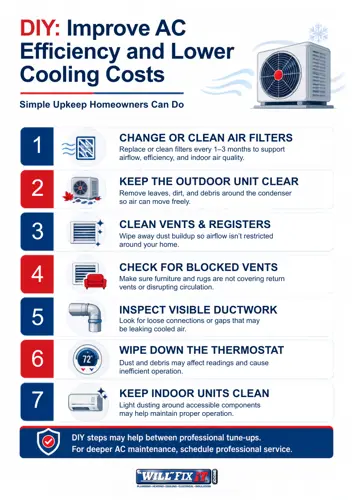
Tips to Improve AC Efficiency and Lower Cooling Costs
Simple DIY AC Maintenance Tasks
These simple maintenance tasks can improve performance and cooling system efficiency, while helping you avoid unnecessary wear on your system:
Change or clean air filters regularly: Dirty filters restrict airflow, forcing your system to work harder and increasing energy use. Replacing them every 1–3 months helps maintain efficiency and supports better indoor air quality
Keep the outdoor unit clear: Remove leaves, dirt, and debris from around the condenser to allow proper airflow and prevent overheating
Clean vents and registers: Dust buildup can block airflow and reduce cooling performance throughout your home
Check for blocked vents: Make sure furniture or rugs aren’t covering return vents, which can disrupt circulation
Inspect visible ductwork: Look for loose connections or gaps that could be leaking cooled air
Wipe down the thermostat: Dust and debris can impact readings and cause your system to run inefficiently
Keep indoor units clean: Light dusting around accessible components helps maintain proper operation
Thermostat Best Practices
Your thermostat settings directly impact both comfort and energy use, and small adjustments can lead to noticeable savings. Setting your temperature higher when you’re away helps reduce unnecessary runtime. In fact, adjusting your thermostat by 7–10°F for about eight hours a day can lower heating and cooling costs by up to 10% annually.
Upgrading to a programmable or smart thermostat automates this process, helping improve cooling system efficiency without constant manual adjustments.
Home Efficiency Improvements
Small changes around your home can reduce system strain and improve cooling system efficiency.
Seal air leaks: Keep cool air from escaping around doors, windows, and ducts
Improve insulation: Helps maintain indoor temperatures and reduce AC runtime
Use ceiling fans: Set to counterclockwise to circulate cool air
Block sunlight: Close blinds or curtains during the hottest parts of the day
Use windows strategically: Open them early or late when outdoor air is cooler
Reduce indoor heat: Limit use of ovens and heat-producing appliances during peak heat
Install an energy-efficient system: Upgrading to a high-efficiency unit can significantly reduce energy use
When combined with proper thermostat settings and regular maintenance, these air conditioning energy efficiency tips can help lower energy bills and reduce system strain.
Seasonal AC Maintenance Checklist
Spring (Pre-Season Prep)
Schedule a professional tune-up: Get your system ready for peak cooling season
Replace or clean air filters: Improve airflow and system performance
Clear debris around the outdoor unit: Remove leaves, dirt, and buildup for proper airflow
Check vents and registers: Make sure they’re open and unobstructed
Test thermostat settings: Confirm your system turns on, cools properly, and holds temperature
Listen for unusual sounds: Catch potential issues early before they worsen
Summer (Peak Usage)
Monitor overall performance: Watch for weak airflow, uneven cooling, or longer run times
Keep air filters clean: Replace as needed to prevent restricted airflow during heavy use
Maintain clear outdoor space: Keep the area around your unit free of debris
Limit heat buildup indoors: Use blinds, curtains, and fans to reduce system strain
Check for frequent cycling: Short cycling can signal efficiency or system issues
Stay aware of rising energy use: Unexplained increases may point to reduced efficiency
Fall (Post-Season Check)
Wipe down accessible components: Remove dust and buildup from vents, registers, and around the unit
Check for visible wear: Look for cracked insulation, rust spots, or loose exterior panels
Clear out seasonal debris: Remove leaves and buildup from around the outdoor unit
Dial back cooling settings: Adjust or disable AC as outdoor temps become more comfortable
Winter (Off-Season Care)
Protect the outdoor unit: Use a breathable cover or top cover to keep out debris
Keep the area clear: Remove leaves, branches, and buildup around the unit
Check system condition periodically: Look for visible damage, loose panels, or buildup
Watch for unusual signs: Note any noises, odors, or changes before the next cooling season
What Homeowners Can Do Themselves vs. When to Call a Pro
There are plenty of simple AC tips you can handle on your own—like changing filters, keeping the area around your unit clear, and making basic thermostat adjustments. These small steps help maintain airflow and reduce strain on your system, but they only go so far. Most homeowners don’t have access to the tools or training needed to safely inspect internal components or diagnose deeper issues.
Professional service goes beyond what DIY maintenance can cover. A trained technician can:
Check electrical connections
Clean condenser coils
Test system performance
Measure refrigerant levels
Identify internal wear
Diagnose and repair minor issues to reduce the risk of unexpected breakdowns
All in all, regular professional maintenance can extend your system’s lifespan and ensure it runs as efficiently and safely as possible.
When to Call a Professional HVAC Technician
Some issues go beyond routine upkeep and require expert attention. Knowing when to call a professional can protect your system, your comfort, and your wallet—especially when performance starts to slip despite following basic AC tips.
Here are some clear signs it’s time to bring in a professional:
No cooling: Your system is running but not producing cool air
Weak airflow or uneven cooling: Rooms feel different temperatures, or airflow is noticeably reduced
Strange noises or odors: Banging, grinding, or musty smells can signal internal problems
Rising energy bills: Higher costs without a clear reason
Frequent cycling: Constant starting and stopping can indicate system strain or malfunction
Addressing these problems early helps prevent more extensive damage and costly repairs. At Will Fix It, every service is backed by our Exceptional Service Guarantee, so you know the job is done right.
Don’t just take our word for it. Check out our reviews to see how homeowners across the San Antonio area trust us to keep their systems running smoothly. Routine professional servicing not only resolves current issues but also helps prevent future breakdowns and keeps your system operating at its best.
Stay Cool Year-Round with Expert AC Care
Consistent upkeep keeps your system efficient, dependable, and ready when temperatures rise. Staying proactive and including professional maintenance can help you reduce long-term costs, avoid unnecessary strain on your unit, and maintain steady comfort without unexpected disruptions or last-minute repairs.
Need an AC repair, upgrade, or tune-up? Explore our service area and call Will Fix It at 726-222-4137 today or schedule online with one of our expert technicians.